
Datei:CSIRO Parkes Radio Telescope.jpg


Originaldatei (2.272 × 1.704 Pixel, Dateigröße: 2,01 MB, MIME-Typ: image/jpeg)
| Beschreibung |
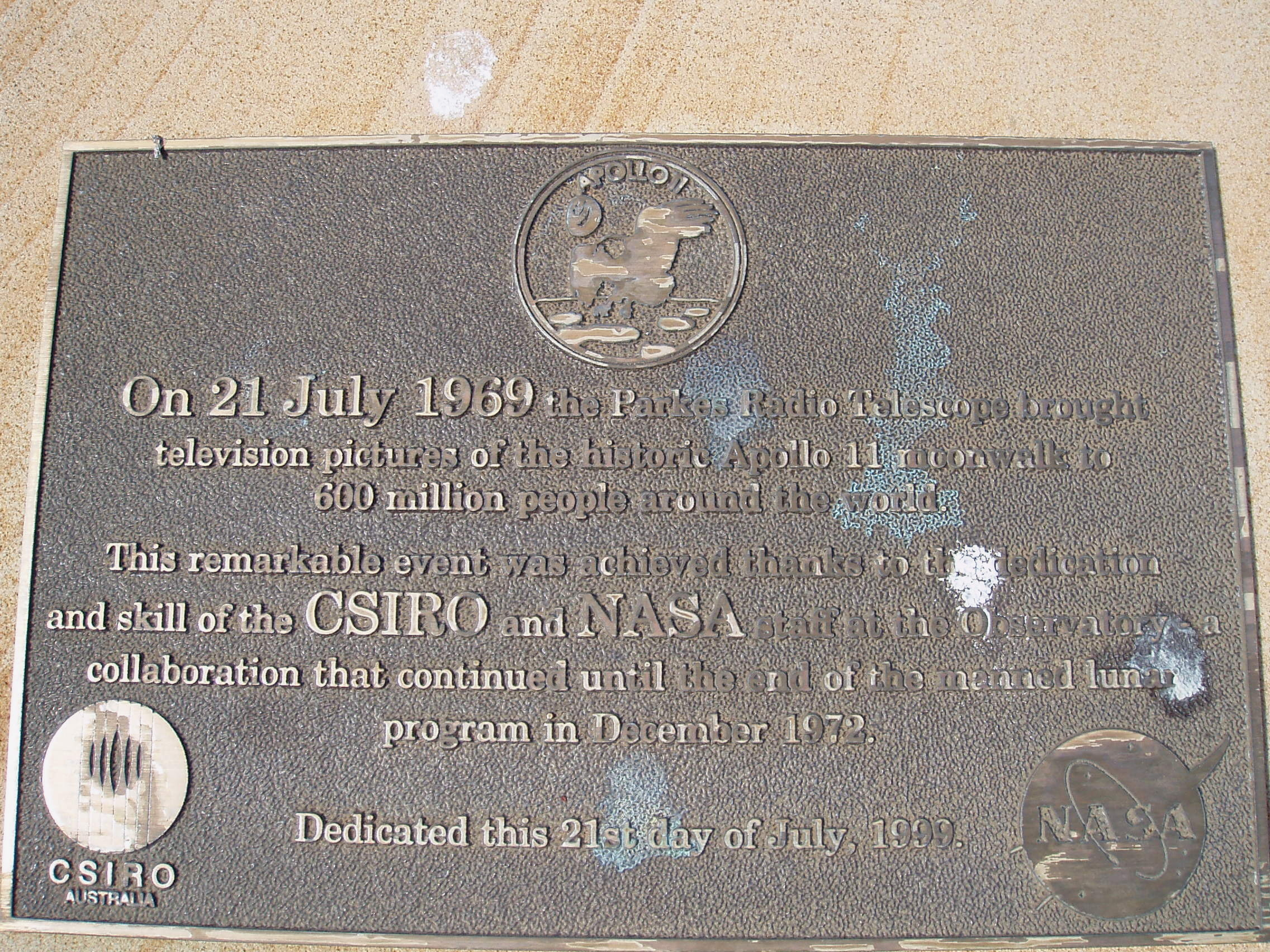
The Parkes Observatory is a radio telescope observatory, 20 kilometres north of the town of Parkes, New South Wales, Australia. It was one of several radio antennas used to receive images of the Apollo 11 moon landing in July 1969. CSIRO Parkes radio telescope is the largest and oldest of the eight antennas comprising the 'Australian Telescope National Facility'. The Compact Array of six 22-metre dishes near Narrabri and another near Coonabarabran link up with the 64 metre Parkes to synthesise a telescope some 300 kilometres across. Since commissioning in 1961, Parkes Observatory has been responsible for many world firsts in radio astronomy. Highlights include: the identification of the first known Quasar in 1963; mapping of important regions in the galaxy, the Milky Way; participating in the NASA Apollo Moon missions, Voyager II encounter of Neptune in 1989, Mars missions in 2004; ESO's Giotto Spacecraft encounter of Halleys Comet in 1986; Galileo Spacecraft's exploration of Jupiter and its moons in 1997; Cassini Huygens mission to Saturn and Titan in 2005; all sky radio surveys of the Southern Skies; Pulsar survey work including the discovery of the first double Pulsar system in 2003; SETI Project Phoenix; and an ongoing search for hidden galaxies. Parkes Dish - the movie star The movie ?The Dish? was loosely based on Parkes involvement with the Apollo moon landings. Parkes has also starred in television commercials, documentaries and even a Korean romance movie. |
| Datum | |
| Quelle |
|
| Urheber | Amanda Slater from Coventry, England |
| Kameraposition |  | Dieses und weitere Bilder auf OpenStreetMap |  |
|---|

Lizenz


- Dieses Werk darf von dir
- verbreitet werden – vervielfältigt, verbreitet und öffentlich zugänglich gemacht werden
- neu zusammengestellt werden – abgewandelt und bearbeitet werden
- Zu den folgenden Bedingungen:
- Namensnennung – Du musst angemessene Urheber- und Rechteangaben machen, einen Link zur Lizenz beifügen und angeben, ob Änderungen vorgenommen wurden. Diese Angaben dürfen in jeder angemessenen Art und Weise gemacht werden, allerdings nicht so, dass der Eindruck entsteht, der Lizenzgeber unterstütze gerade dich oder deine Nutzung besonders.
- Weitergabe unter gleichen Bedingungen – Wenn du das Material wiedermischst, transformierst oder darauf aufbaust, musst du deine Beiträge unter der gleichen oder einer kompatiblen Lizenz wie das Original verbreiten.

|
Dieses Bild wurde ursprünglich auf Flickr veröffentlicht und am April 18, 2009 vom Administrator oder vertrauenswürdigen Benutzer File Upload Bot (Magnus Manske) überprüft. Die Überprüfung ergab, dass das Bild zum Zeitpunkt der Überprüfung auf Flickr mit der oben genannten Lizenz markiert war. |
Dateiversionen
Klicke auf einen Zeitpunkt, um diese Version zu laden.
| Version vom | Vorschaubild | Maße | Benutzer | Kommentar | |
|---|---|---|---|---|---|
| aktuell | 16:08, 18. Apr. 2009 | | 2.272 × 1.704 (2,01 MB) | wikimediacommons>File Upload Bot (Magnus Manske) | {{Information |Description= The Parkes Observatory is a radio telescope observatory, 20 kilometres north of the town of Parkes, New South Wales, Australia. It was one of several radio antennas used to receive images of the Apollo 11 moon landing in July |
Dateiverwendung
Die folgende Seite verwendet diese Datei:
